
Something new is happening in Paris.
For the first time, the Three.js community is coming together for a dedicated Three.js Conference, bringing creators, developers, designers, artists, and people from across the community under one roof.
And while we can’t all be there in person, Codrops is bringing you along.
Houmahani Kane, Adel Sanaa and Rafael Teixeira are on the ground in Paris, capturing the talks, experiments, demos, people, conversations, and all the little moments happening around the conference. We’ll be sharing their view throughout the event, updating this post as things unfold.
Think of this as our little window into the conference: a collection of moments, discoveries, reactions, and highlights from these two days in Paris.
Before It Begins
Before the doors open, there’s already a feeling in the air.
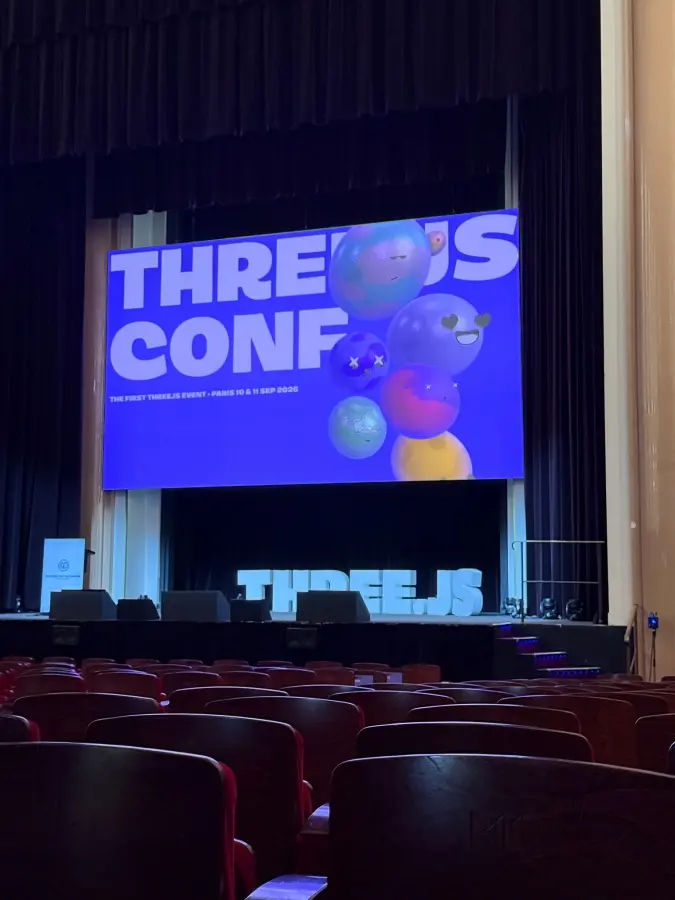
The venue is coming together, the stage is getting ready, and the first people are starting to arrive. After months of anticipation, the very first Three.js Conference is finally about to begin.
Here’s a little look at the moments before everything kicks off in Paris. 🇫🇷
The Conference Begins
And just like that, it begins. 🇫🇷
The first people, the first talks, the first demos, and that unmistakable feeling of a community finally coming together in one place.
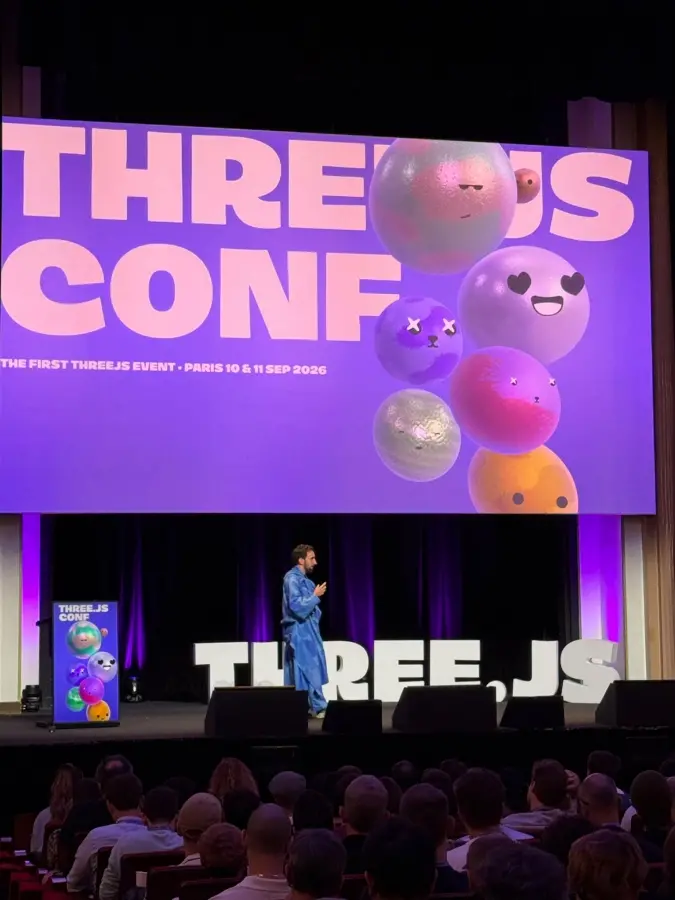
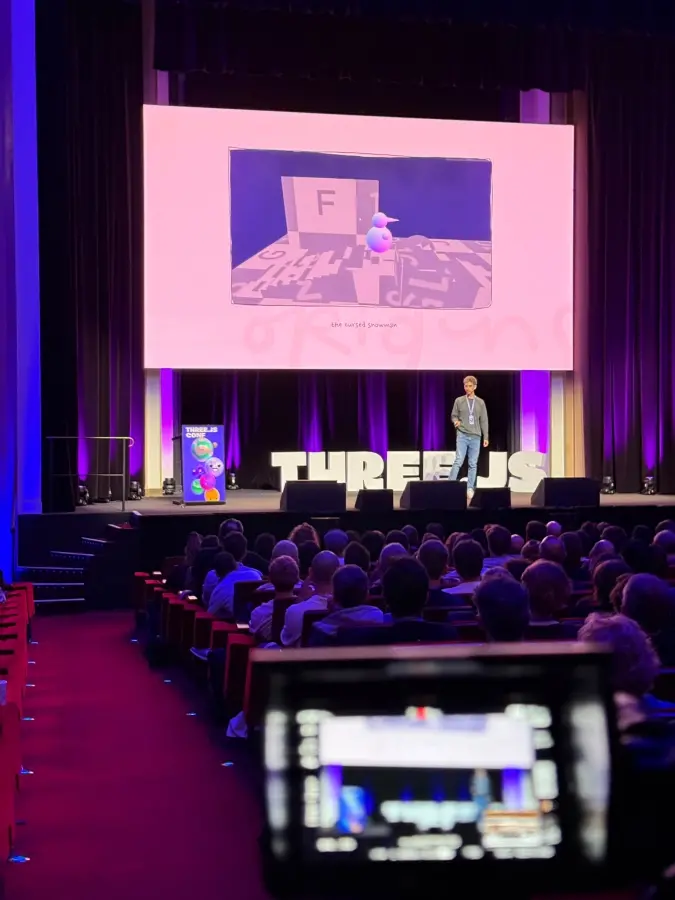
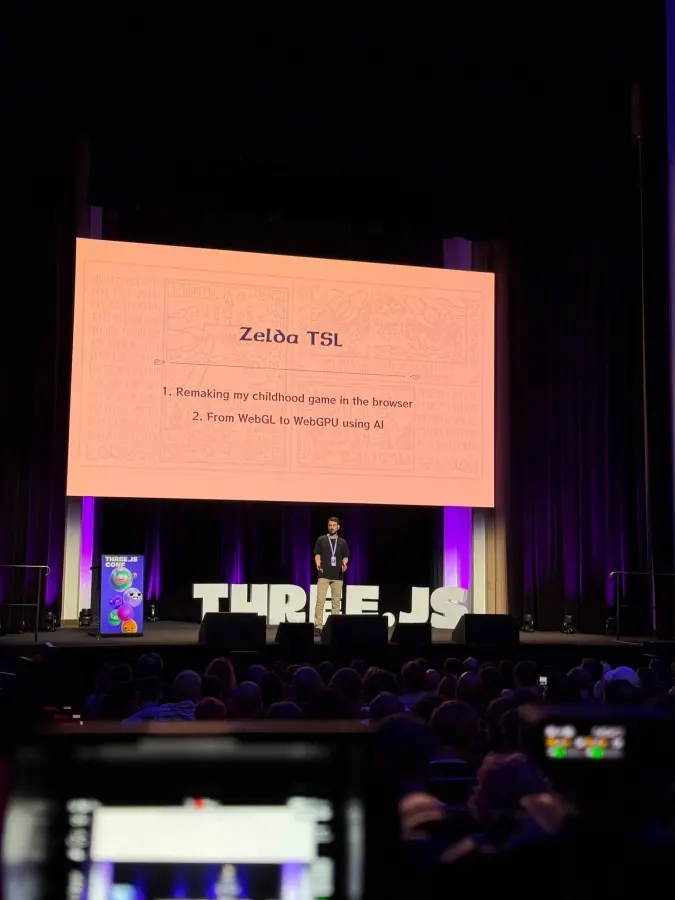
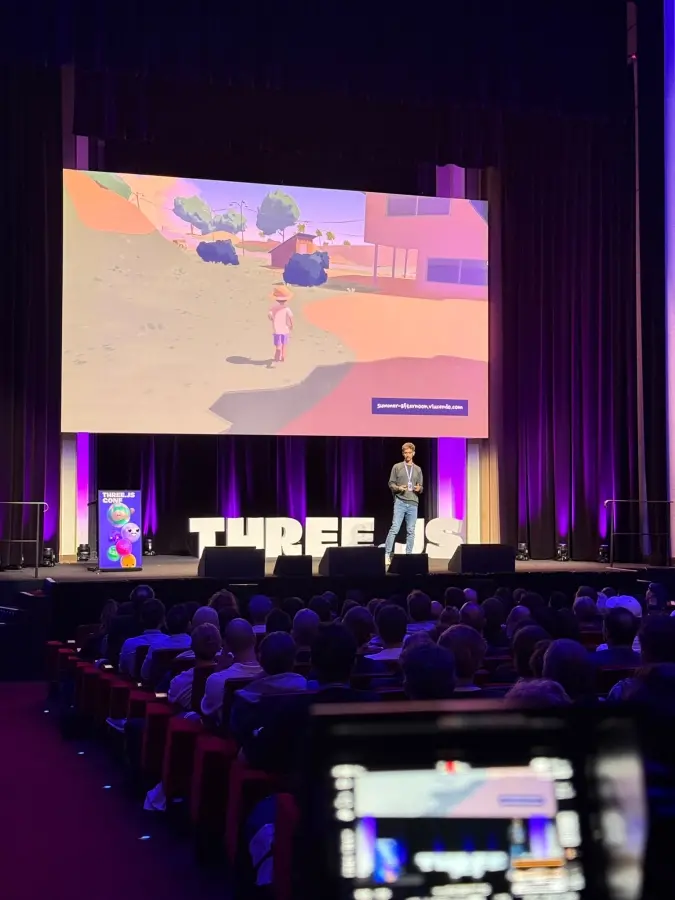
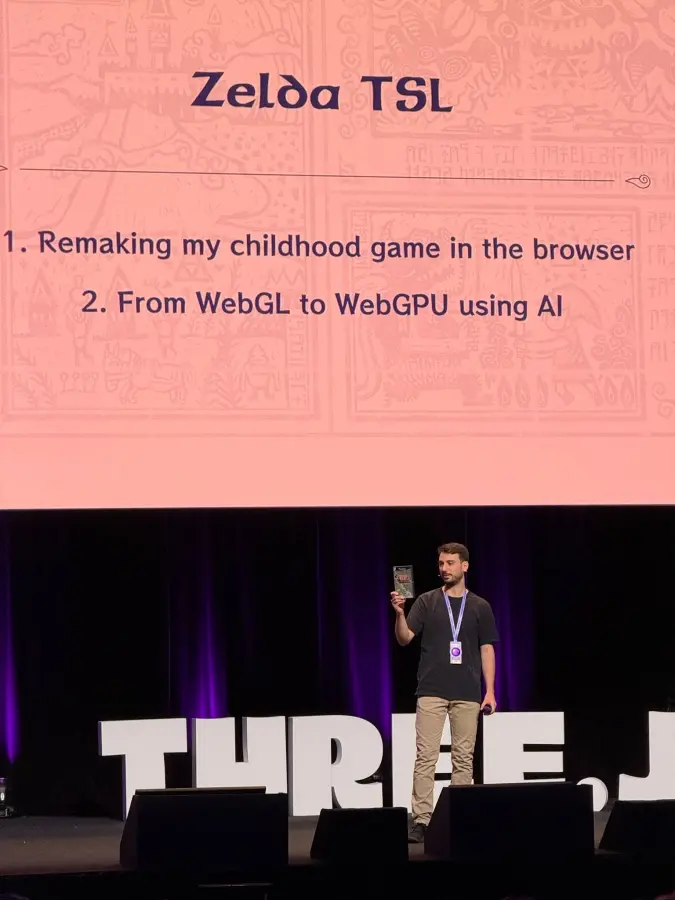
Here are some of our first impressions from Paris, including moments from the opening talks by Vicente Lucendo and Robin Payot.
Two talks, two very different journeys
Vicente Lucendo took us behind the scenes of Messenger, diving into the craft, feeling, sound and technical details that made the experience so memorable.
Then Robin Payot brought a childhood favourite to the browser, rebuilding part of Zelda with Three.js and pushing the project from WebGL into WebGPU.
Nostalgia, pixels, shaders, LODs and a whole lot of creativity. Not a bad way to start. 👀
A Quick AI Conversation
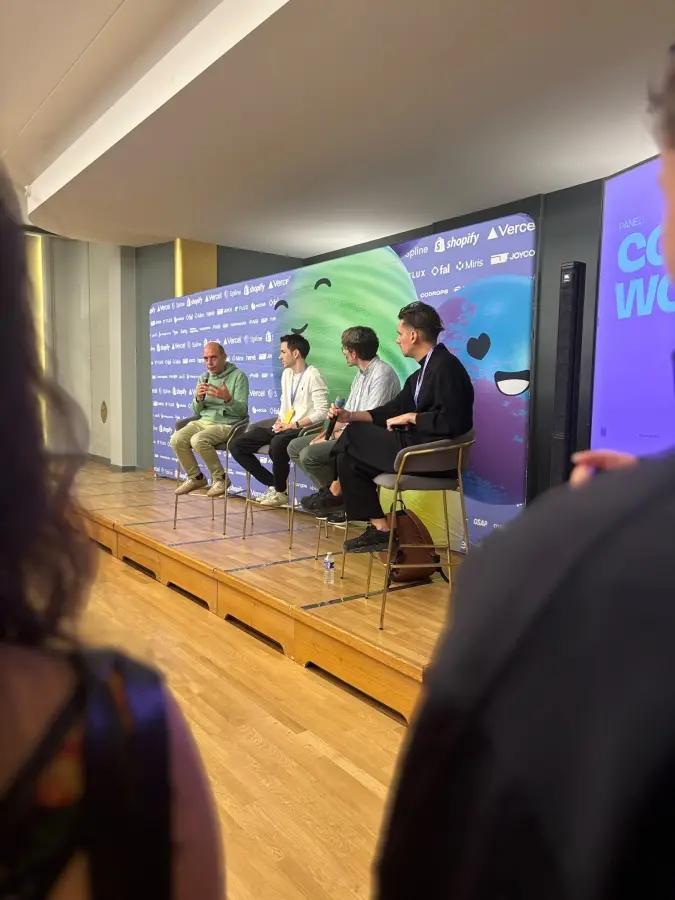
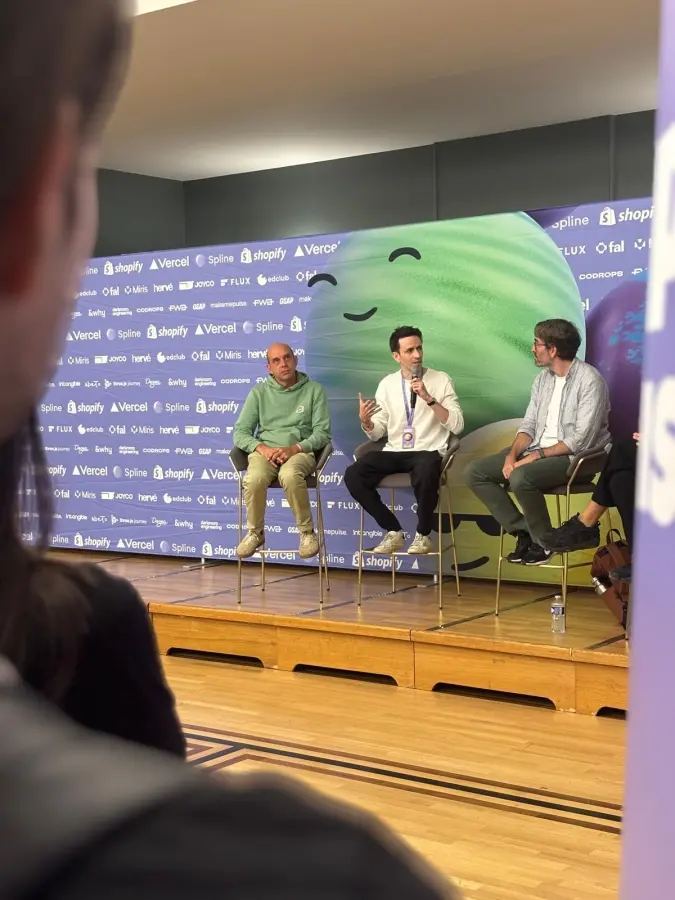
During the first break, Mr.doob, Renaud Rohlinger, Nicolas Barrateau and Florian Zumbrunn gathered for a panel discussion about the impact of AI on the creative and technical world of Three.js.
It was a lively conversation, touching on how AI is changing the feeling of coding, from deep focus and long hours of problem-solving to the excitement of seeing things come together so quickly.
But the fundamentals still matter. The struggles that once took weeks to overcome are what build the technical understanding that allows you to push these new tools further. And if AI makes it feel like you can build anything, the new question becomes: when do you stop? 👀
With the conference buzzing all around them, it was definitely a conversation happening right in the middle of the action.
Before Lunch: Animation and Digital Experiences
The morning continued with three very different perspectives on creating better experiences for the web.
Cassie Evans from GSAP brought some exciting news: GSAP 4 is coming. Already used on more than 13 million websites, the next major release introduces easier spring-based animations, improved Three.js integration, and new tools for smoother DOM and WebGL performance. Epic! We can’t wait to try it!
Daria Nevezhyna looked at digital experiences from another angle, asking why so much of the web still feels flat when technology can do so much more. Her immersive product configurators showed how atmosphere, interaction and storytelling can transform the way we experience a product online.
Kim Boutin took us on a personal journey through the evolution of the web, from early experiments to her work today exploring glitches, unconventional interfaces and new ways of seeing.
Three talks, three different approaches, but a shared belief that the web can be much more expressive. ✨
Three Ways of Pushing the Web Forward
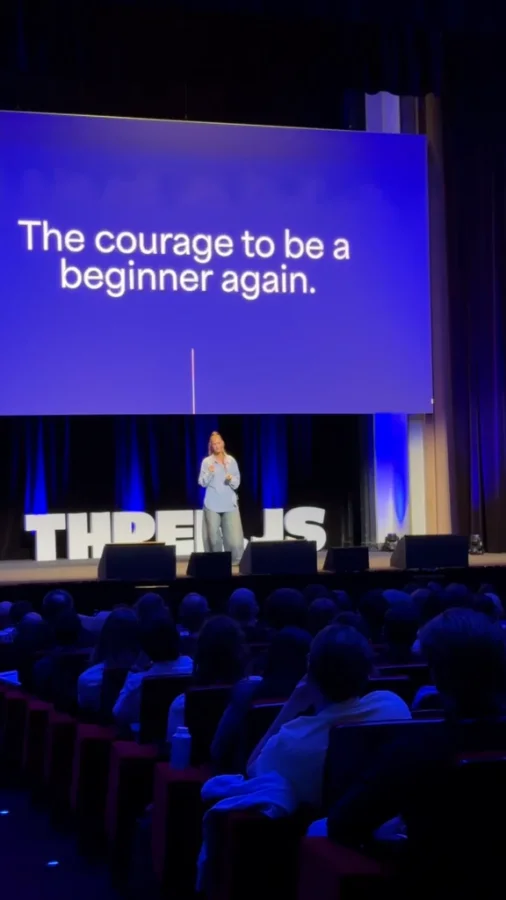
The next talks took things in three very different directions. Célia Lopez shared her journey from learning 3D and WebGL through trial and error to working with some of the biggest names in the field. Her message was simple: keep learning, share your work before it’s perfect, and keep moving. Dream → Learn → Enjoy.
Natalia Markoborodova and Thomas Nattestad then explored HTML in Canvas, a new experimental approach that brings the strengths of HTML and the visual possibilities of Canvas closer together. With Three.js support through THREE.HTMLTexture, it opens the door to playful hybrids where 3D objects and regular web interfaces can interact as one.
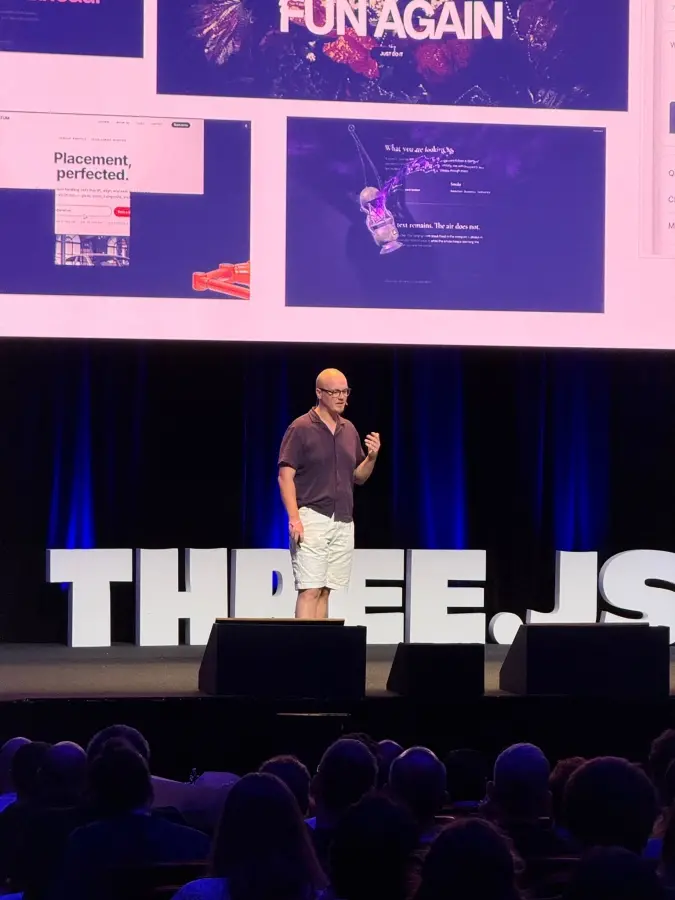
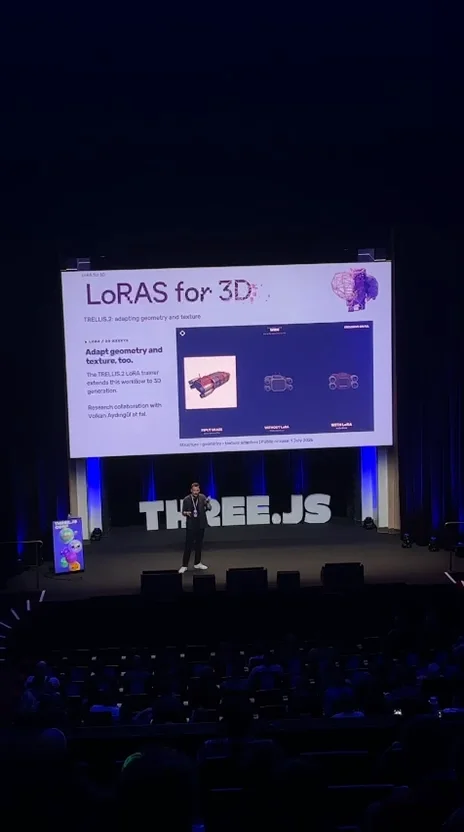
Finally, Lovis Odin showed how generative AI is becoming part of real production workflows. From Blender scenes and image-to-video pipelines to custom LoRAs, Gaussian splats and real-time generation, the focus is shifting from simply prompting for an output to building more controllable creative systems.
Roast My Folio 🔥
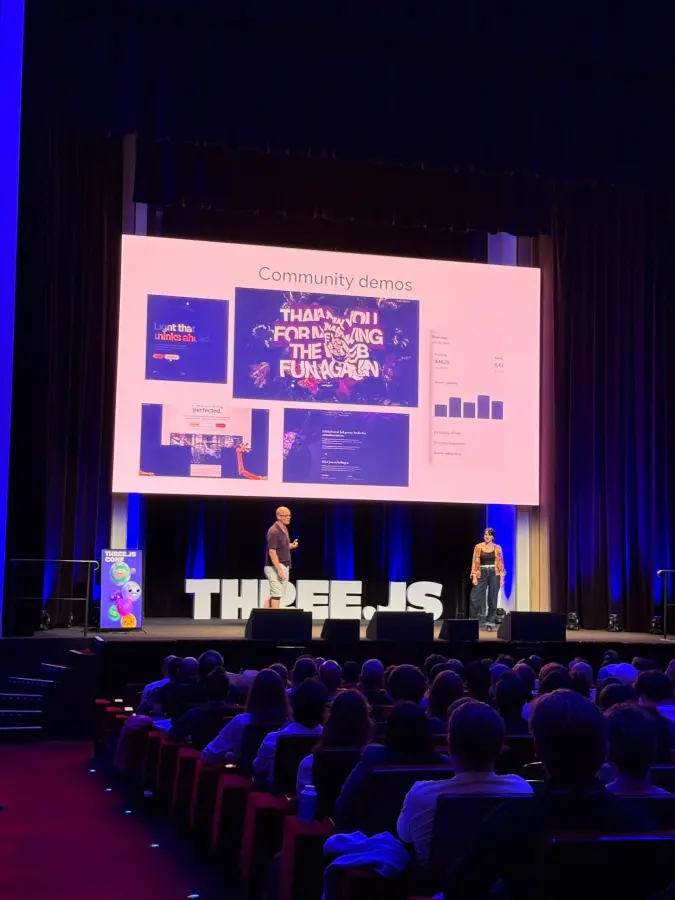
What happens when you put a portfolio in front of Bruno Simon, Cassie Evans and Nicolas Barradeau? You get opinions. Strong ones.
In this fun session, the three jurors reviewed portfolios and quickly found some shared red flags: fluid simulations are illegal, long loading times are a no, too many effects can make a site lose focus, and nobody wants to read a huge block of text or a list of every tool you use. The verdict? Make decisions, pay attention to the details, and let the work speak for itself.
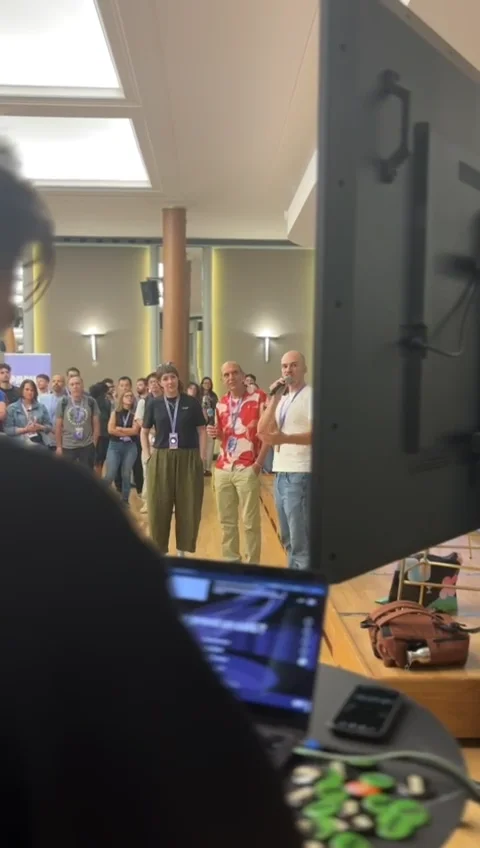
Ten Lightning Talks, Two Minutes Each ⚡️
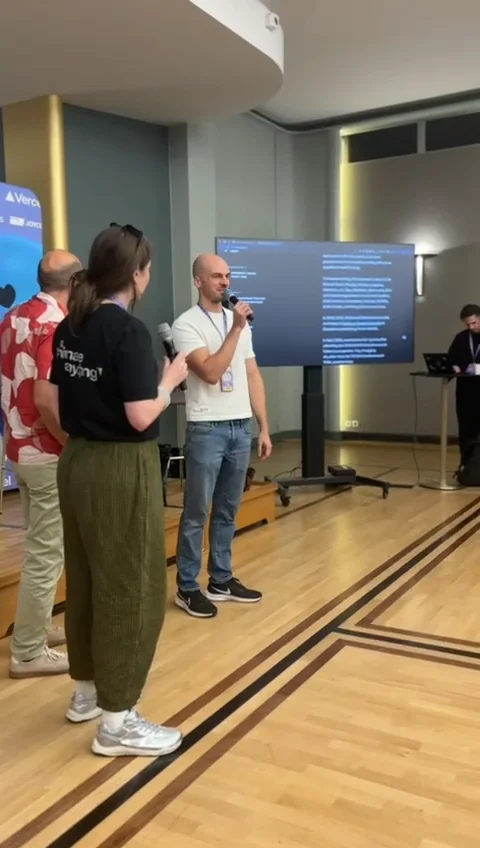
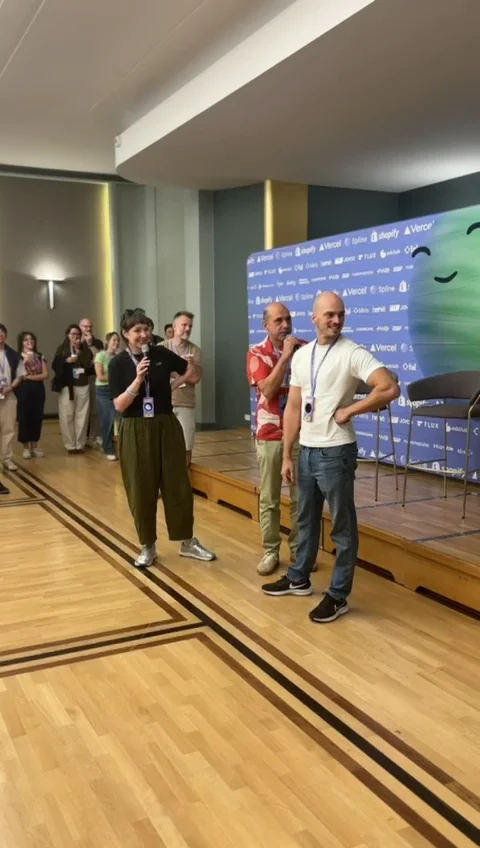
Ten speakers. Two minutes each. No time to waste.
The lightning talks moved at full speed, jumping from AI-powered 3D creation and browser-based tools to interactive installations, animation, games and real-time rendering. Unbound showed their work exploring AI + Three.js and their Unbound Loop platform, while Sketchfab co-founder Cédric Pinson demoed a browser-based 3D tool for quickly lighting, tweaking and creating model variations. Thrixel presented an agentic approach to creating interactive 3D worlds, and another project (Spirit Plant) by Damien Seguin let visitors grow digital plants on touchscreens and take them home through a QR code.
Julian Garnier showed upcoming Anime.js tools with editable keyframes, springs and real-time animation, while Nathan from Immersive Garden shared work including Harry Potter and Intangible, their more intuitive approach to building 3D scenes. We also saw a Three.js arcade game made purely for fun, an After Effects-inspired tool for real-time 3D, Victor’s thoughts on protecting the creative community in the age of AI, and Dario Sanchez exploring how to make physically convincing lighting faster. His final point stuck with us: rendering isn’t always the bottleneck. Perception is. And technical accuracy alone doesn’t make something beautiful. Taste does.
Behind the Three.js Conference with Hervé Studio
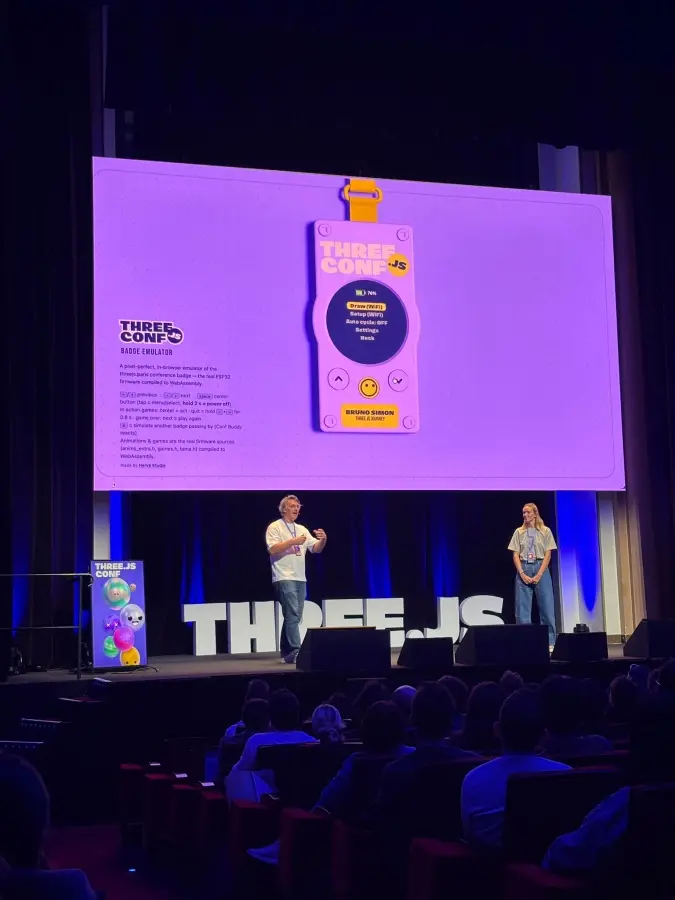
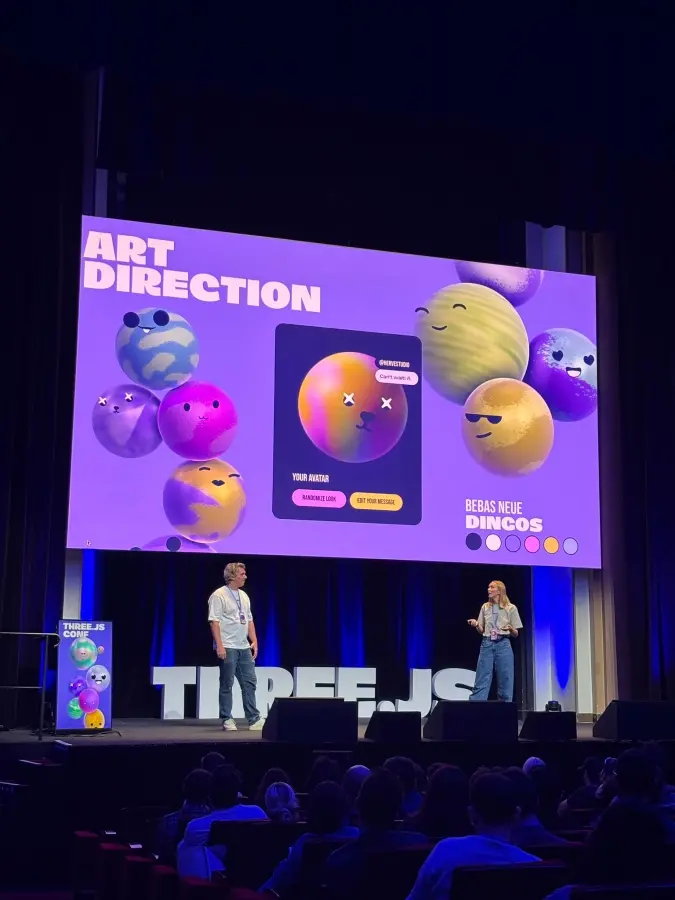
While much of the conference was happening on stage, there was another story behind it: the months of work that went into creating the world around it. Julie Martin and Romain Briaux from Hervé Studio spent around seven months working on the conference, not just designing the website, but shaping its art direction, social presence, scenography, merchandise and physical experience.
Their relationship with Three.js started years earlier with a project for Zenly, and their work has since grown across interactive 3D, branding, motion and 3D illustration. For Three.js Conf, they didn’t want to create another technical showcase. The idea was to put the community at the center. That led to the playful characters and visual language that now run through the conference, from the website and social content to printed materials, video and the venue itself. They built internal tools to keep that visual system flexible and consistent, while the Maison de la Chimie itself became part of the creative process and inspired new ideas for the physical experience.
Some of the smallest details turned into projects of their own. The interactive 3D venue map, for example, makes finding your way around feel almost like playing a little game. And then there were the speaker badges. Romain spent around a month experimenting to get the electronic enclosure right, before producing them became something of a family project over the summer holidays. The audience gave them a big round of applause when the story was shared on stage. It was a fitting detail for a conference that was never just a website or a collection of talks. It was a whole visual world, built across digital, physical and community experiences. 💙
Mr.doob: AI, Coding & a New Level of Abstraction
It wouldn’t be a Three.js Conference without Mr.doob. 💙 As the creator of Three.js, he has spent years opening up new possibilities for creative coding and 3D on the web. And now, he’s exploring what happens when AI becomes part of that creative process.
Mr.doob has been experimenting with AI and Three.js for years, but newer coding agents have changed what feels possible. One of his most eye-opening moments was seeing an eight-year-old build a small 3D game with AI. Ideas that once felt too time-consuming can now become a Saturday-morning experiment.
And for someone who sees himself more as a problem solver than a programmer, that shift makes perfect sense. He compared AI coding to anti-aliasing in the 90s: once software could handle the work, there was no reason to miss doing it manually. His experiments now range from lighting, shadows, WebXR and TSL to bringing games like Quake, Descent and Doom into Three.js. The tools still require curiosity and understanding, but the level we work at is changing. We’ve moved one level of abstraction higher. And his advice for what comes next? Stay curious. ✨
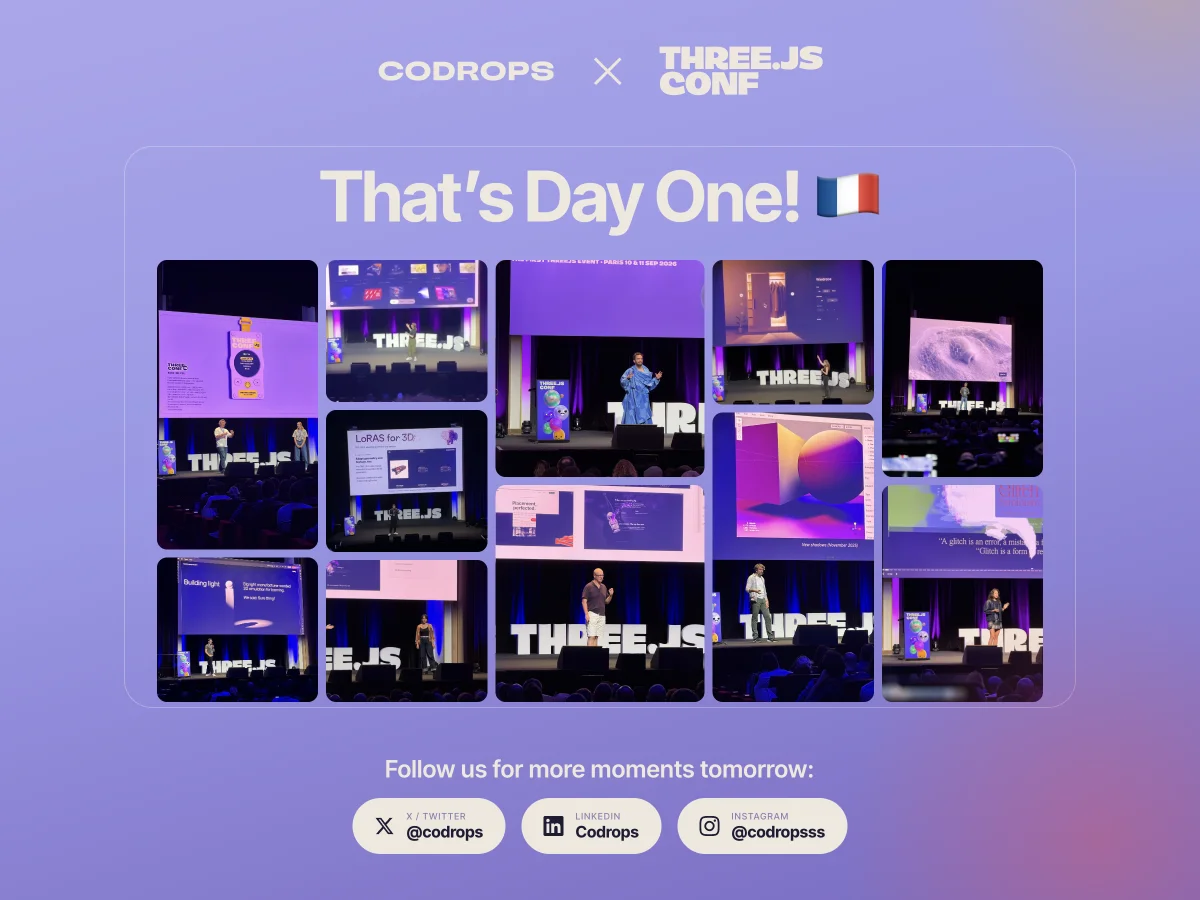
Day One Wrap
And just like that, Day One is done. From technical deep dives and creative experiments to conversations about AI, animation, 3D and the future of the web, it’s been a packed first day in Paris. We’ve loved sharing these moments with everyone following along from afar, and there’s still plenty more to come. Day Two starts tomorrow.
Day Two Begins
Day Two is already underway in Paris. 💙 We arrived early to catch the first moments of the morning, and the conference was already starting to come alive. We caught up with Misha Kiiatkin from EdClub and Renaud Rohlinger from Utsubo, while behind the scenes, Adel was getting ready for something pretty special: an interview with Mr.doob. 👀
There’s plenty more ahead, so let’s get into Day Two.
Two Ways of Building for the Web
The next two talks showed just how different the worlds you can build with Three.js can be.
Justine Soulié and Patrick Heng brought Ponpon Mania to life, combining illustration and technology in a playful, character-driven interactive story. Everything was made by hand, with the characters, environments and interactions all working together to create a world that feels alive. Instead of conventional navigation, you explore through draggable panels, move the camera into scenes and interact with layered illustrations, custom shaders and cursor-driven effects. Behind the scenes, the duo built their own editor to bring illustration and development together, while texture atlases, GPU compression and adaptive quality helped keep the experience running smoothly. The result is a lovely example of how storytelling, illustration, code and interaction can continuously inspire each other.
Then Kris Baumgartner and Dennis Smolek took us in a very different direction, looking at the future of React and Three.js through Poimandres. The open-source collective behind React Three Fiber and other popular tools is evolving around four principles: simple, pragmatic, stable and open. A major focus now is preparing React Three Fiber for the WebGPU and TSL era, alongside new explorations in 3D tooling, upscaling, denoising and games. The team is also working toward a more structured ecosystem where contributors can take on initiatives with greater autonomy.
Two very different projects, but both showing the same thing: there’s still so much room to rethink how we build for the web.